
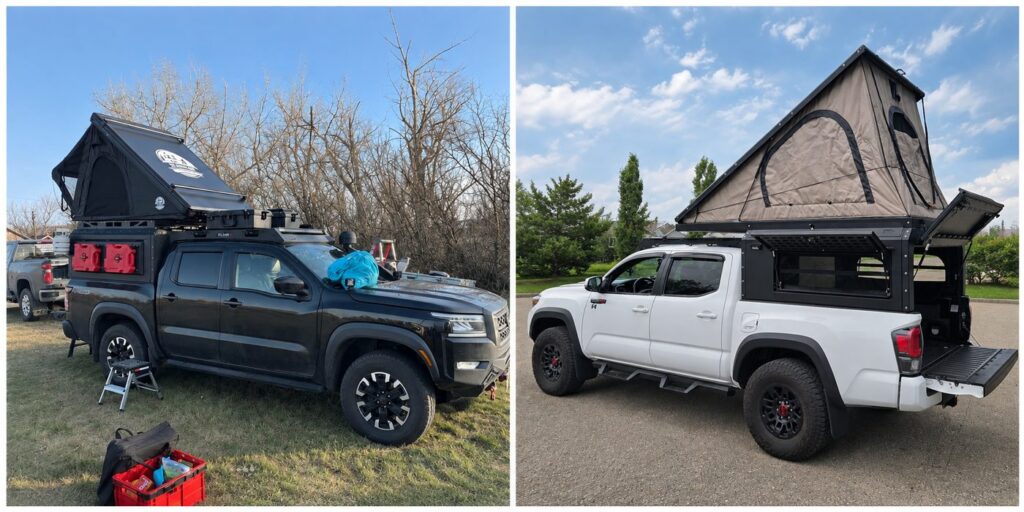
A rooftop tent feels like a clean, simple upgrade until the weather turns, the gear starts piling up, or you need to leave camp before breakfast. The canopy camper vs rooftop tent decision is really about how you use your truck when the road gets rough, the temperature drops, and your equipment needs to stay secure.
For occasional fair-weather trips, a rooftop tent can be a solid place to start. For truck owners building a capable platform for mountain bikes, hunting gear, fishing equipment, recovery tools, and four-season travel, a canopy camper brings more function to every mile.
Canopy Camper vs Rooftop Tent: The Real Difference
A rooftop tent is primarily a sleeping system. It mounts to a roof rack, bed rack, or truck canopy and gives you an elevated place to sleep. Most models fold out or pop open quickly, and they keep you off wet ground, mud, and crawling critters. That is a meaningful improvement over ground camping.
A canopy camper is a truck canopy and shelter system working as one. It encloses the truck bed, provides protected storage, and adds an elevated sleeping area that deploys when camp is set. The truck stays useful during the day, but your gear is no longer riding exposed in the bed or crammed into the cab.
That difference matters because a truck-based trip is rarely just about where you sleep. It is also about where you keep a stove, wet boots, tools, food, climbing gear, fuel, fishing rods, and the equipment that makes remote travel safer and more comfortable.
Storage and Security Change the Equation
A rooftop tent does not automatically solve cargo storage. If the tent sits on a bed rack, the truck bed may remain open to weather and casual theft unless you add a tonneau cover, drawer system, boxes, or another enclosure. If it sits on the cab roof, the bed is still available, but the tent is higher, and loading it can become less convenient.
A canopy camper puts secure, weather-protected storage at the center of the build. You can organize gear inside the bed, lock it up when you stop for food or hit a trail, and keep essential equipment out of rain, dust, and road grime. That is especially valuable when the truck is carrying expensive outdoor equipment or tools between trips.
Security is not just about locking a tailgate. A serious canopy system needs a structure designed to resist forced entry, durable access points, and materials that hold up to years of vibration and backroad use. A lightweight setup should not mean a flimsy one.
For travelers who spend long days away from camp, enclosed storage also reduces the amount of gear that has to move in and out every time you make a stop. Pack it once, secure it, and keep moving.
Setup Speed Is More Than a Spec Sheet Number
Both options can be quick to deploy, particularly hard-shell rooftop tents and pop-up canopy campers. But setup is only one part of the camp routine.
With a rooftop tent, you may still need to unload gear to access the bed, set up a separate storage area, or move equipment around before you can cook and sleep comfortably. A ladder is normally part of the routine, too. That is fine for many users, but it becomes less appealing when you arrive late in the rain or make frequent overnight stops.
A pop-up canopy camper keeps the sleeping space integrated with the cargo area beneath it. You open the sleeping section, climb in, and your gear remains protected below. The best designs give you standing or near-standing room at the tailgate area, practical ventilation, and sleeping access without turning camp setup into a full unpacking job.
There is also the question of mobility. If a rooftop tent folds out over the side or rear of the truck, its footprint can limit where you park. A pop-up canopy camper generally stays within the truck’s profile, which is useful in tight forest sites, trailhead parking, and windy roadside camps.
Weight, Height, and Truck Handling
A rooftop tent can be relatively light, but its weight often sits high above the truck. Add a rack system, awning, recovery boards, fuel, and other accessories, and the center of gravity starts climbing. On pavement, that may be manageable. On off-camber trails, washboard roads, and rough access routes, you will notice the added height.
A canopy camper carries more structure, but a well-engineered model can still be remarkably light. Blindman Overland’s Yucca-Pac systems are built around a lightweight aluminum and composite approach, with models roughly in the 300 to 450 pound range depending on configuration. That gives truck owners enclosed storage and pop-up shelter without stepping into the weight class of a conventional slide-in camper.
The right choice depends on your truck’s payload, rack rating, suspension condition, tire capacity, and how much gear you carry. Do not shop by camper weight alone. Account for passengers, water, coolers, recovery gear, food, accessories, and the tongue weight of any trailer you may tow.
Height deserves equal attention. A low-profile rooftop tent can fit garages and drive-throughs better than some canopy campers when closed. But it may still add significant height to a tall truck and rack system. Measure the complete vehicle, not just the advertised tent height.
Four-Season Comfort Is Where the Gap Widens
A quality rooftop tent can handle cool nights with the right sleeping bag, insulation, and condensation management. It is a strong three-season option for many campers. In warm weather, its elevated airflow and wide views are hard to beat.
But a tent remains fabric-based shelter. Wind, extended rain, blowing snow, and cold-weather condensation expose its limits faster. Insulated liners help, but they also add setup time, bulk, and another piece of gear to manage.
A canopy camper built for year-round use has the advantage of an enclosed, hard-sided base below the pop-up sleeping area. Materials, seals, insulation options, ventilation, and the way the roof system closes all matter. For western mountain weather, shoulder-season hunting, and cold nights above the treeline, this is not a minor detail.
That does not mean every truck camper is automatically ready for winter. Look closely at the construction. Wood framing can retain moisture and eventually create problems after years of wet gear, condensation, and freeze-thaw cycles. A no-wood composite structure and formed aluminum exoskeleton are built for a different level of durability.
When a Rooftop Tent Is the Better Buy
A rooftop tent makes sense when your priority is a simple sleeping platform, your trips are mostly short and fair-weather, and you do not need enclosed truck-bed storage. It can also be the right move for drivers who want to keep the bed open for large work loads or who plan to move the tent between vehicles.
It is often the lower-cost path at the beginning, especially if you already own a compatible rack. Just budget honestly for the full system. Racks, mounting hardware, cargo boxes, bed covers, lighting, and security upgrades can narrow the price gap.
When a Canopy Camper Earns Its Keep
Choose a canopy camper when your truck needs to do more than carry a bed on the roof. It is the stronger choice for travelers who need secure cargo capacity, regular access to their gear, a compact camp footprint, and a shelter system that works beyond summer weekends.
It also suits owners who use their truck every day. A lightweight canopy camper can keep the vehicle practical for errands, work, hauling outdoor gear, and spontaneous overnights without the bulk of a large RV-style camper.
The best setup is the one that supports the trips you actually take, not the ones you imagine once a year. Before buying, load your current gear into the truck, picture a wet arrival after dark, and ask one useful question: where will everything go when it is time to sleep? The answer usually points you toward the right platform.