
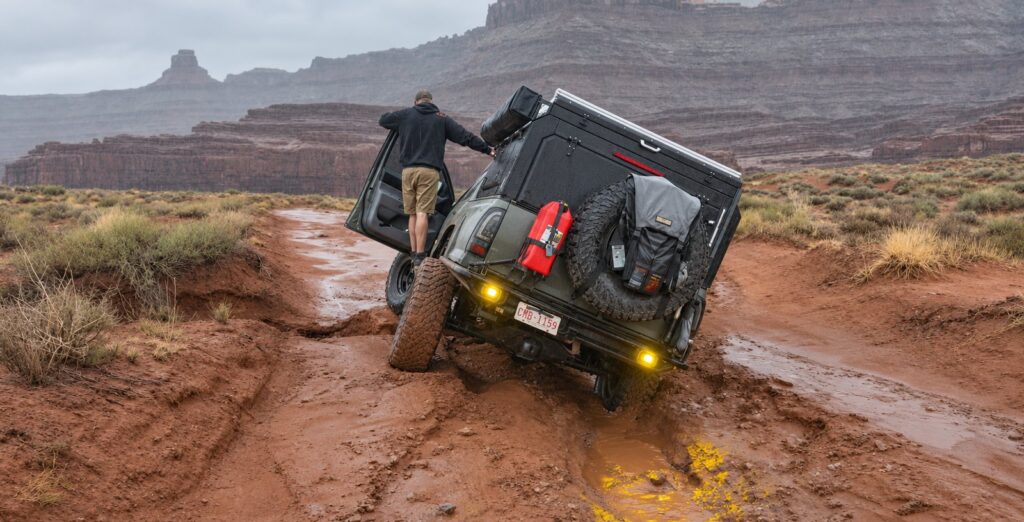
A camper can look trail-ready on the dealer lot and still carry a weakness you will not see until years later: wood hidden behind a finished wall. No wood truck camper construction takes that vulnerable material out of the structure from the start. For truck owners who deal with washboard roads, wet gear, snow, heat, and long miles far from a repair shop, that decision changes how a camper carries weight, handles moisture, and holds up over time.
The point is not that every wood-framed camper is destined to fail. Plenty have served owners well. But wood requires moisture control to stay healthy, and truck camping is a hard environment for any material that can absorb water, swell, rot, or provide a pathway for hidden damage. A properly designed aluminum and composite camper approaches the problem differently: keep the structure light, stable, and ready for hard use without making wood the backbone.
What No Wood Truck Camper Construction Actually Means
A true no-wood design removes wood from the camper’s structural framework. Rather than relying on timber framing inside walls, roof panels, or floor assemblies, the structure uses materials such as formed aluminum, aluminum tubing, composite panels, insulation, and durable exterior skins.
That distinction matters because “wood-free” can be used loosely. Some campers may reduce the amount of lumber used but still retain plywood floors, wood blocking, or timber-framed sections where fasteners, windows, and interior components attach. Asking what supports the walls, roof, floor, and lift system gives you a clearer answer than a marketing label.
At Blindman Overland, the Yucca-Pac is built around a formed aluminum exoskeleton and no-wood composite structure. The goal is straightforward: deliver an all-season shelter and secure canopy system without turning your pickup into a heavy RV. Material choices must support the kind of travel this platform is made for, from Alberta backroads to desert two-tracks and mountain trailheads across the West.
Why Wood Becomes a Liability in a Truck Camper
Truck campers move, twist, vibrate, and see dramatic temperature changes. Unlike a stationary cabin, they are repeatedly loaded by rough roads and exposed to water from rain, snow, condensation, wet recovery gear, and roadside spray. Even a small leak can become a larger issue when moisture reaches wood that is enclosed behind panels.
Wood does not instantly fail because it gets wet. The real concern is trapped moisture. If a seal around a window, roof penetration, or exterior fitting begins to leak, water can migrate through framing and sheathing before the owner sees a stain or soft spot. By then, repairs may involve removing interior finishes, insulation, cabinetry, and exterior panels to reach the affected area.
No wood truck camper construction does not eliminate the need for maintenance. Seals still need inspection, fasteners still need attention, and any camper needs proper ventilation. What it does eliminate is rot as a structural failure mode. Composite and aluminum materials can still be dented, scratched, or damaged, but they do not decay like damp lumber.
Weight is not just a spec sheet number
A lighter camper changes the experience of using your truck. It leaves more payload for people, fuel, water, recovery equipment, bikes, hunting gear, and the supplies that make remote travel comfortable. It can also improve braking, steering feel, suspension wear, and off-road control compared with a much heavier slide-in camper.
Weight matters most when it is carried high above the bed rails. A tall, heavy camper raises the vehicle’s center of gravity and makes body roll more noticeable on uneven terrain. A compact, lightweight canopy camper keeps the profile lower while still providing enclosed storage and an elevated sleeping area.
There is a trade-off. A minimal aluminum-composite platform will not give you every appliance, oversized tank, and residential-style interior found in a large hard-side RV. For many owners, that is the point. They want a truck that remains useful Monday through Friday and capable when the pavement ends.
Water resistance is designed, not claimed
No-wood construction is one part of moisture management, not a substitute for good design. Quality comes down to panel joints, roof transitions, sealing methods, window installation, drainage paths, and the way exterior hardware is mounted. Poor seams can leak regardless of what the wall core is made from.
The advantage of composite panels and aluminum framing is their tolerance for the occasional reality of outdoor use. Snow melts. Rain blows sideways. Ski boots, waders, and camp gear come back wet. When the structure itself is not built around absorbent wood components, there is less opportunity for an unnoticed moisture event to become structural rot.
Ventilation still earns its place. Two people sleeping in a compact camper create condensation, especially in cold weather. Open a vent, manage interior humidity, and avoid sealing wet gear inside for days at a time. All-season capability comes from combining insulation, controlled airflow, durable materials, and sensible use.
Strength, Security, and Real-World Repairability
An aluminum exoskeleton can provide more than a lightweight frame. When it is engineered as part of the shell, it helps create a rigid, protective enclosure for your gear. That matters when your truck is parked at a trailhead, a fishing access point, or a remote campsite where leaving bikes, tools, cameras, and recovery equipment exposed is not an option.
A strong exterior also needs practical access. Secure doors, lockable storage areas, and protected cargo space turn a pickup bed into more than a place to toss gear under a tarp. The right setup lets you organize equipment, keep it out of sight, and sleep above it without unloading the truck at camp.
Repairability deserves an honest look, too. Aluminum can be bent or dented in a hard impact, and composite panels can require specialized repair or replacement. Wood framing is familiar to many repair shops, while advanced camper materials may require a builder or service center with the right experience. That is not a reason to avoid no-wood construction, but it is a reason to buy from a company that can support installation, maintenance, repairs, and replacement parts.
Is a No-Wood Camper Right for Your Truck?
Start with your truck’s payload sticker, not a brochure headline. Subtract the installed camper weight, passengers, fuel additions, bed accessories, recovery gear, water, food, and the equipment you actually travel with. A 300- to 450-pound camper leaves a very different margin than a conventional slide-in unit weighing well over a thousand pounds before loading it up.
Then consider how you camp. If your priority is a full indoor kitchen, bathroom, large freshwater capacity, and extended stays without moving the truck, a larger camper may fit your needs better. If you want to cover distance, explore rougher roads, protect your equipment, and set up a sleeping space quickly, a lightweight pop-up canopy camper makes a strong case.
The choice also depends on your climate. No-wood materials are valuable in wet and freezing conditions, but cold-weather comfort still depends on insulation, a reliable heat plan, ventilation, and your willingness to manage moisture. A rugged shell is the foundation, not magic.
Questions to Ask Before You Buy
Ask the builder exactly what is inside the floor, walls, and roof. Find out whether any plywood, wood blocking, or timber framing remains in structural areas. Ask how panels are joined, how roof loads are supported, and where water is expected to drain if a seal eventually needs service.
You should also ask about installed weight for your specific truck, not a stripped-down base model. Confirm how the camper mounts, whether it can accommodate your bed length and rail configuration, and how access to cargo works with the sleeping area deployed. Finally, ask who will service it after the sale. A capable camper deserves capable support.
The best camper is not the one with the longest feature list. It is the one that carries what you need, protects the gear that gets you outside, and gives you confidence to keep driving when the road turns rough. Choose materials with that reality in mind, then live free. Be wild.