
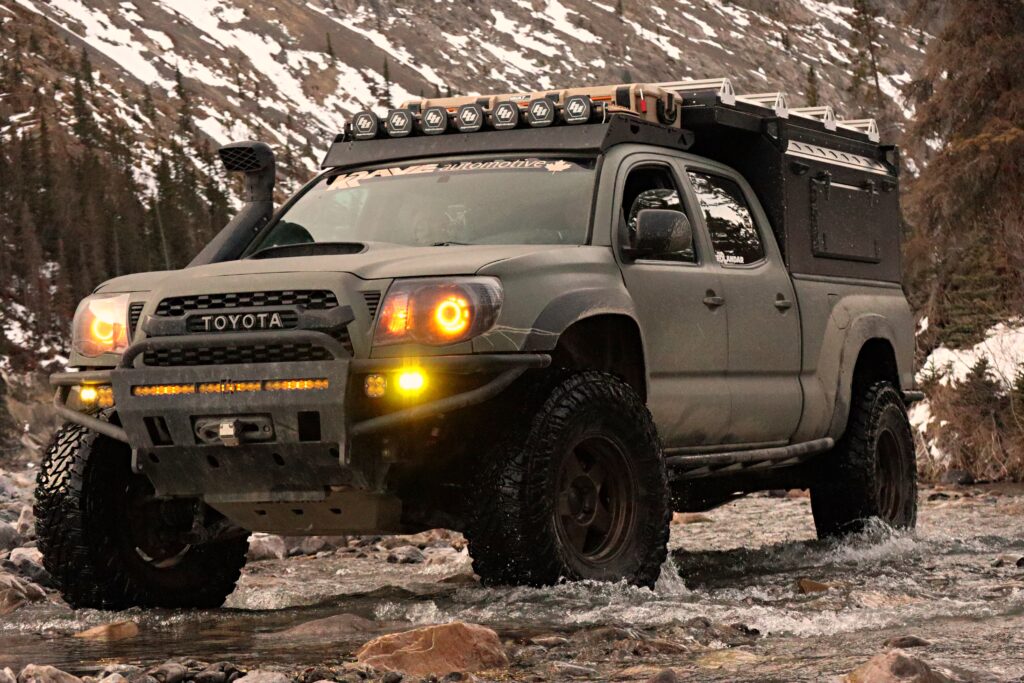
A real all season pop up truck camper earns its place when the forecast turns ugly, the road turns rough, and the gear in the bed still needs to arrive dry and secure. It is not just a summer tent on a truck. It is a compact shelter and cargo system built for people who use their pickup as a daily driver on Monday and a backcountry basecamp on Friday.
For mountain bikers chasing late-fall trails, hunters running logging roads, anglers leaving before daylight, and couples who refuse to park the truck when temperatures drop, the right camper changes the range of possible trips. The goal is simple: travel lighter than a conventional slide-in camper, sleep higher than a ground tent, and keep essential equipment protected from weather, wildlife, and opportunistic hands.
What Makes a Pop Up Camper Truly All-Season?
“All-season” gets used loosely in the camper world. A pop-up roof and fabric sleeping area can be a smart way to keep weight low, but they do not automatically create a winter-ready shelter. The difference comes down to the complete system: structural materials, insulation strategy, weather sealing, ventilation, heat management, and how the camper handles daily use in wet, freezing, dusty, or windy conditions.
A capable all-season setup starts with a hard-sided lower body that protects cargo and creates a durable living base. The pop-up section should deploy quickly and close securely, without turning camp setup into a wrestling match during rain or snow. Quality seals, protected openings, and durable fabrics matter because wind-driven moisture finds weak points fast.
Cold-weather camping also demands realistic expectations. A lightweight pop-up camper will not behave exactly like a heavily insulated, full-height RV. It can, however, offer an efficient and comfortable shelter when it is paired with appropriate heat, cold-weather bedding, managed ventilation, and a thoughtful camp routine. Condensation is part of life when people sleep in a small heated space. Good airflow is not optional, even when the temperature falls.
Why Low Weight Changes the Whole Truck
The biggest advantage of a pop-up truck camper is not only the sleeping space. It is what low weight preserves.
A camper in the roughly 300 to 450 pound range, depending on configuration, leaves more payload capacity for passengers, recovery equipment, water, bikes, hunting gear, and the supplies that actually make a remote trip work. It also puts less stress on suspension, tires, brakes, and drivetrain than a bulky slide-in camper. That matters on washboard roads, narrow forest access routes, and long highway runs into the mountains.
Lower profile matters too. With the roof down, a pop-up camper reduces wind resistance and avoids much of the top-heavy feel that comes with tall hard-sided campers. You still need to drive for the load, especially on off-camber terrain, but the truck remains closer to the vehicle you chose in the first place.
For many owners, that is the real value proposition. The truck can remain useful between trips. It can fit more places, carry secure equipment, and head out for a single night without the commitment of towing a trailer or loading a massive camper.
Canopy Storage Is More Than Convenience
A truck bed filled with loose bins is an invitation to clutter, damage, and slow camp setup. An integrated canopy camper creates enclosed storage beneath the sleeping area, turning the bed into a protected equipment bay.
That space is valuable for more than sleeping bags and camp chairs. It can carry recovery boards, tools, climbing gear, fishing equipment, camera cases, hunting gear, or work supplies with less exposure to dust and weather. When gear is organized and accessible, getting off the pavement becomes easier to do more often.
Security deserves equal attention. A camper should provide more protection than a soft tonneau or exposed bed rack. Strong locking points, durable access doors, and an anti-intrusion structure help keep valuable equipment out of sight and harder to reach. No mobile system is invincible, but secure storage lets you stop for food, hike from the trailhead, or sleep away from the truck with more confidence.
Materials Matter When Roads Get Bad
Wood-framed camper construction has been common for decades, but it carries a familiar risk: moisture can find its way into seams, create hidden damage, and add weight where you do not want it. For a truck camper expected to see mud, snow, dust, washboard, and changing temperatures, material choices are not marketing details.
A no-wood composite body avoids many of the rot concerns associated with traditional construction. A formed aluminum exoskeleton adds strength where a lightweight camper needs it most, helping the structure handle vibration and off-road use without relying on unnecessary bulk. The result should feel purpose-built rather than fragile.
Blindman Overland builds the Canadian-made Yucca-Pac around that idea: a lightweight composite structure, formed aluminum protection, secure canopy storage, and a pop-up sleeping platform designed for serious truck travel. It is a practical answer for drivers who want capability without turning their pickup into an oversized RV.
Build quality also shows up in the details. Look at how doors close, how latches engage, where wiring is routed, how corners are protected, and whether service access is straightforward. The best camper is not merely impressive on delivery day. It should remain usable after thousands of miles of gravel, temperature swings, and repeated setup cycles.
Choosing the Right All Season Pop Up Truck Camper
Start with the truck, not the camper brochure. Confirm your available payload using the payload sticker on the driver-side door jamb, then account for passengers, fuel, accessories, gear, water, and the camper itself. A camper that looks light on paper can still push a midsize truck beyond its real-world limits once the trip is loaded.
Next, be honest about how you travel. A solo traveler may prioritize a compact sleeping layout and maximum cargo room. A couple may need more sleeping width, easier interior access, and space for two sets of wet-weather gear. Riders and anglers often benefit most from an open bed storage layout, while hunters may put security and fast access at the top of the list.
Also consider where the truck spends most of its time. If it sees tight trails, garage parking, and high crosswinds, a low closed profile is a major advantage. If you camp through shoulder seasons or winter, ask practical questions about insulation options, heat source compatibility, ventilation, seals, and the time required to set up in bad weather.
Do not overlook installation and support. Proper fitment, wiring, mounting, and pre-delivery inspection affect both safety and long-term reliability. A knowledgeable installer can help prevent problems that are easy to miss until you are hours from pavement.
Build for the Trip You Actually Take
An all-season camper does not mean every trip has to be an expedition. Its best feature may be making simple trips more comfortable: a dawn departure before the trailhead fills up, a warm place to sleep after a long day of fishing, or protected gear when a storm rolls across camp.
Choose a system that respects your truck’s limits, protects the equipment you rely on, and can handle the roads that lead beyond the campground. Then keep it loaded with the essentials, watch the weather, tread lightly, and go when the next open weekend gives you a reason.