A truck camper for hunting trips has to do more than give you a dry place to sleep. It needs to carry rifles and optics securely, keep wet gear out of the cab, survive rough access roads, and make a 4:30 a.m. departure less of a production. When the weather turns, the right setup also becomes the place where you warm up, organize tomorrow’s hunt, and sleep hard enough to do it again.
For hunters who already rely on a pickup as their daily vehicle, a lightweight canopy-style camper can make more sense than a bulky RV or a traditional slide-in. You keep the compact profile and trail access of your truck while gaining enclosed storage and an elevated sleeping space. The best choice depends on your hunting style, your truck’s payload, and how far off pavement you plan to go.
Why Hunting Demands More From a Truck Camper
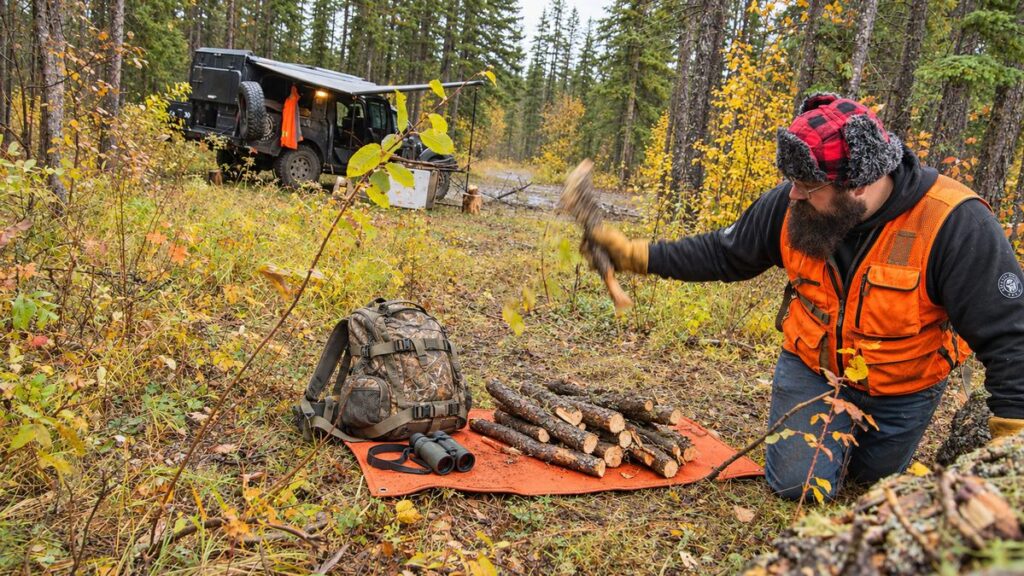
A campground camper and a hunting camper are not always the same thing. Hunting often starts before dawn, ends after dark, and takes place far from graded roads or services. You may be hauling muddy boots, a soaked outer layer, a quartered animal in a cooler, a generator, or a week’s worth of food and water. That puts real demands on storage, structure, and access.
Security matters just as much. A truck bed filled with visible gear is an easy target at a trailhead, motel lot, or fuel stop. A proper hunting platform should keep expensive equipment enclosed, out of sight, and protected by more than a fabric zipper or a basic topper latch. Look for locking access points, strong panels, and a structure designed to resist prying.
Then there is the weather. A cold October morning in the Rockies, a wet coastal elk hunt, and a late-season whitetail trip each expose weak camping setups quickly. A camper does not need to be a rolling condo, but it should give you a dry, insulated refuge that can be set up quickly after a long day in the field.
Start With Truck Payload, Not Floor Plan
It is easy to get distracted by sleeping capacity, drawers, and optional accessories. Start with the number on your truck’s payload sticker. That rating must account for the camper, passengers, fuel, water, dogs, recovery gear, food, weapons, coolers, and every add-on bolted to the truck.
A heavy slide-in camper can consume most of a half-ton truck’s available payload before you load hunting gear. It can also change how the truck handles on rutted roads, side slopes, washboard, and loose two-track. A lighter platform leaves more capacity for the gear that actually supports the hunt and puts less strain on tires, suspension, brakes, and drivetrain.
This is where a lightweight aluminum canopy camper earns its keep. A system in the roughly 300 to 450 pound range can preserve the utility of a midsize or full-size pickup while still providing protected cargo space and a sleeping platform. Lower weight does not automatically mean lesser construction, though. Ask what the walls, roof, joints, and sleeping structure are made of. Wood framing can hold moisture and degrade over time. A no-wood composite build with a formed aluminum exoskeleton is better suited to repeated exposure, rough roads, and hard use.
Keep the Center of Gravity Low
A hunting truck often travels loaded, on uneven ground, with a roof rack, spare tire, fuel, and camp gear competing for space. The higher and heavier the load, the more you feel it. A low-profile canopy system keeps mass closer to the bed rails than a tall slide-in camper, helping preserve stability and reducing wind resistance on the highway.
That does not mean every hunter needs the smallest possible camper. If you are running a full-size truck, hunting with family, or staying out for extended periods, more space may be worthwhile. The point is to match camper weight and height to the terrain you actually drive, not the most extreme trip you can imagine.
Secure Storage Is Part of Your Hunting System
A truck bed should not become a pile of loose cases, bins, and wet clothing. Good storage shortens the morning routine and keeps the cab free for passengers, maps, and a clean change of clothes. It also creates separation between food, fuel, weapons, recovery equipment, and camp gear.
For a hunting truck camper, organize storage around the jobs you do repeatedly:
- Daily-access gear such as boots, rain layers, headlamps, and packs should be reachable without unloading camp.
- Secure equipment such as firearms, optics, electronics, and tools needs enclosed, lockable space.
- Dirty or wet items need their own bin or zone so they do not soak sleeping gear and food.
- Heavy items, including water, coolers, and recovery equipment, should ride low and close to the cab.
- Meat-hauling equipment should be planned before the harvest, not improvised afterward.
Integrated canopy storage is valuable because it turns the bed into a protected cargo compartment rather than a space you have to rebuild at every stop. Anti-intrusion construction matters here. A thin truck cap may conceal equipment, but it is not the same thing as a rigid, lockable system built to protect valuable cargo in remote places.
Cold Weather Comfort Is About Recovery
Hunters do not need luxury. They need recovery. A dry sleeping area, enough room to change clothes, and insulation that takes the edge off a cold night can make the difference between a productive multi-day hunt and packing up early.
Pop-up campers offer a useful balance. With the roof down, the truck stays compact for travel and brushy access roads. With the roof raised, you gain sleeping room without committing to the height and weight of a fixed hard-sided camper. Two sleeping-area configurations can also matter more than people expect. A solo hunter may prioritize cargo volume and a simple bed, while two hunters may want separate space, better access, or room for a dog.
Be realistic about conditions. Insulation slows heat loss, but it does not replace proper cold-weather bedding, ventilation, and safe heat practices. Condensation is common when damp clothes, wet dogs, and breathing bodies occupy a compact shelter. Crack ventilation as conditions allow, keep wet gear separated, and avoid relying on unvented heaters inside the sleeping area.
Choose a Setup That Does Not Slow Down the Hunt
The best truck camper for hunting trips sets up fast and packs down without drama. If camp requires twenty minutes of moving gear, leveling, and wrestling fabric every evening, you will eventually start skipping the parts that make it useful.
Look for a roof system you can operate reliably with gloves on and a sleeping area that remains protected from wind and rain. Check how the camper works when the truck is parked off-level, because hunting camps rarely sit on perfect pads. Also consider access with the roof down. You should still be able to reach essential gear at a gas station, trailhead, or roadside pullout.
Off-road capability is not just about oversized tires and aggressive photos. It is about preserving departure angle, avoiding unnecessary height, securing every load, and choosing materials that will not loosen or crack from constant vibration. A lightweight, tightly mounted camper is easier to live with on washboard than a tall, overloaded setup with gear strapped everywhere.
Blindman Overland builds its Yucca-Pac around that reality: compact canopy utility, elevated sleeping, secure storage, and Canadian-made all-season construction without the excess weight of a conventional RV.
Build for the Hunt You Actually Take
A weekend deer hunter who drives forest service roads has different needs than a backcountry elk hunter living from the truck for ten days. The first may value fast setup, gear security, and a warm place to sleep near public land. The second may prioritize payload margin, water capacity, recovery equipment, food storage, and space to dry out after long days.
Before buying, load out your truck on paper. Include the camper, passengers, coolers, water, fuel, weapons, packs, camp kitchen, batteries, dog gear, and the meat-hauling plan. Consider where you will sleep when a storm hits, where wet clothes will go, and whether you can access the items you need before daylight without waking everyone in camp.
A capable hunting camper should make the truck more useful, not turn it into something too heavy, tall, or precious to take down the road that leads to the hunt. Choose the platform that carries your gear quietly, protects it properly, and lets you wake up ready to move when the woods are still dark. Live free. Be wild.