
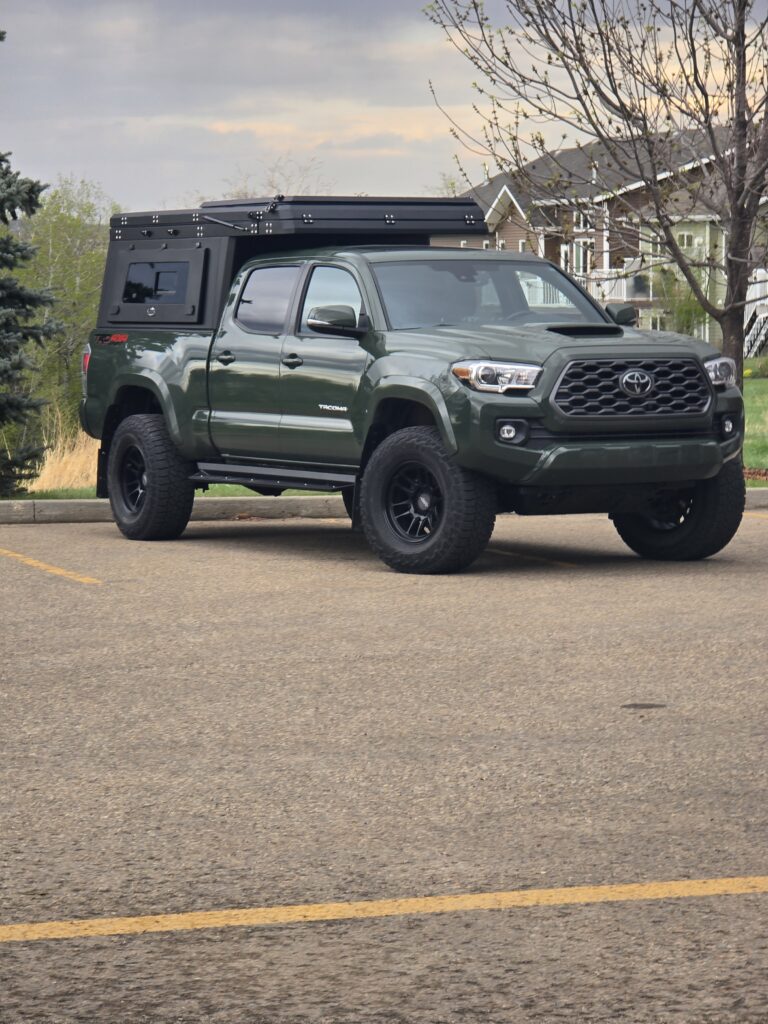
A mid size truck pop up camper has one job: make your truck more capable without turning it into something you no longer want to drive. For a Tacoma, Colorado, Ranger, Frontier, Gladiator, or similar pickup, that means keeping weight low, protecting valuable gear, and creating a dry place to sleep when the weather turns ugly far from the nearest campground.
The wrong camper can eat payload, raise your center of gravity, block access to your gear, and make rough roads feel worse than they need to. The right one preserves the reason you bought a midsize truck in the first place: it fits daily life, threads through tight trails, and still gets you out into country where a big RV has no business going.
Why a Midsize Truck Needs a Different Camper Approach
Midsize pickups are capable, but payload is the number that matters most when choosing a camper. A truck’s listed payload must account for the camper, passengers, fuel, water, recovery equipment, food, bikes, tools, and every other item that finds its way into the bed before a trip. It adds up quickly.
That is why a lightweight camper is not simply a nice feature. It is the foundation of a safe, predictable truck build. A camper in the roughly 300 to 450 pound range leaves far more room for the equipment and people that make a trip possible. It also reduces the suspension sag, braking burden, and top-heavy feel commonly associated with conventional slide-in campers.
A low-profile pop-up design helps in another way. With the roof down, the truck remains more aerodynamic and easier to place on forest roads, in fuel stations, under trailhead branches, and in the garage. Raise the roof when camp is made, and you gain the headroom and sleeping space that a fixed shell cannot provide.
What a Mid Size Truck Pop Up Camper Should Deliver
A camper should solve real travel problems, not add more systems to manage. For most truck owners, that starts with protected cargo. Mountain bikes, hunting gear, climbing equipment, camera cases, recovery tools, and camp bins need to stay dry and out of sight. An open truck bed with a rooftop tent may offer a place to sleep, but it often leaves the rest of the load exposed or awkwardly organized.
A canopy-style pop-up camper combines enclosed storage with elevated sleeping space. You can keep the bed functional, lock up your gear, and still sleep above the cargo area. That layout matters when you are moving camp every day or arriving late after a long drive.
Security deserves more attention than it gets. Remote trailheads and overnight stops are not the place for flimsy windows, loose-fitting doors, or a roof tent full of expensive gear beneath it. Look for anti-intrusion construction, solid latching, and a structure designed to protect cargo while the truck is parked. Security is not just about theft. A strong enclosed system also gives you more confidence around wildlife, wind, and rough travel.
Weight Comes Before Accessories
It is tempting to start with the accessory list: solar, awnings, fridge slides, roof racks, extra batteries, lighting, and water storage. Start with the camper’s dry weight instead. Then calculate your loaded truck weight honestly.
Check the payload sticker on the driver’s door jamb, not a generic number found online. Cab configuration, trim level, factory options, and aftermarket add-ons all affect available payload. A lightweight shell gives you options. A heavy camper can force expensive suspension changes before you have even packed for your first trip.
Suspension upgrades can improve ride quality and control, but they do not increase the manufacturer’s legal payload rating. Treat airbags, leaf packs, and shocks as handling tools, not permission to overload the truck.
Structure Matters When the Weather Does Not Cooperate
A pop-up camper is exposed to more movement, vibration, temperature swings, and wind than a stationary cabin. Materials and construction methods make the difference between a platform built for years of use and one that begins to loosen after a few washboard roads.
Wood-free composite construction is a major advantage for four-season truck camping. It removes the rot-prone framing found in many traditional RV products. A formed aluminum exoskeleton adds strength without piling on unnecessary weight, while an insulated pop-up section helps make shoulder-season and winter trips more realistic.
All-season does not mean you can ignore conditions. Any camper will need sensible ventilation, appropriate bedding, heat management, and attention to condensation in cold weather. But a properly built enclosure gives you a far better starting point than thin tent fabric or an uninsulated cap.
Pop-Up Camper, Rooftop Tent, or Heavy Slide-In?
A rooftop tent can be an affordable entry into truck camping. It gets you off the ground, sets up quickly, and leaves the bed available for cargo. The trade-off is that every overnight stop requires climbing up and down, and your gear still needs a separate storage solution. In bad weather, packing a wet rooftop tent can also become a chore.
A traditional slide-in camper offers more interior space, often with built-in appliances and larger tanks. For some travelers, especially those staying in established campgrounds or living out of the truck for extended periods, that space is worth the compromise. On a midsize truck, though, slide-ins can consume most of the available payload and dramatically change how the truck handles off pavement.
A pop-up canopy camper sits in the middle with a useful advantage: it keeps the truck bed enclosed and organized while maintaining a compact, lightweight profile. It is a strong fit for travelers who need secure storage every day and comfortable shelter every night, without hauling an apartment into the backcountry.
Build Around How You Actually Travel
Before choosing a camper, think through a normal trip from the moment you leave home. Where do wet boots go? Where will you keep fishing rods, helmets, recovery gear, food, and camp chairs? Can you access essential equipment without unpacking half the truck? Can you sleep inside with the roof down if weather, wind, or a late arrival makes setup impractical?
Couples often prioritize sleeping space and organized storage. Solo travelers may favor open cargo room for bikes, skis, dogs, or work equipment. Hunters and anglers may need washable storage and dependable security at remote access points. Overlanders crossing long distances may care most about low weight, fuel economy, and a roof system capable of carrying additional gear.
There is no universal perfect layout. There is only the layout that supports your use without asking you to compromise every time you leave pavement.
Roof Capacity and Accessory Planning
A pop-up roof can carry more than many owners expect, but capacity must be matched to the lift system and the way you camp. Bikes, solar panels, lightweight boats, traction boards, or an awning can be practical additions when the roof and lifting hardware are designed for them.
Be careful about stacking weight high simply because the roof has space. Heavy roof loads affect off-camber stability, add wind resistance, and make setup harder. Put dense gear low in the bed whenever possible. Reserve the roof for lighter, bulky items or equipment that needs quick access at camp.
Installation Is Part of the Product
A camper can be well built and still perform poorly if it is installed carelessly. Proper mounting, electrical routing, sealing, tailgate clearance, brake light visibility, and accessory integration all matter. The truck bed and camper need to work as one system, especially when washboard, snow, mud, and off-camber terrain enter the picture.
That is why pre-delivery inspection and ongoing service matter. A capable camper should be supported by people who understand wiring, repairs, fitment, and the practical differences between truck platforms. The Yucca-Pac from Blindman Overland is built around this approach: lightweight Canadian-made construction, secure canopy storage, and a true pop-up shelter designed for hard use rather than showroom parking lots.
Choose Capability You Will Use
The best camper is not the one with the longest feature sheet. It is the one that gets packed on Friday, handles the road out, protects your equipment, and gives you a reliable place to sleep when the temperature drops. Keep the build light, keep the load organized, and choose construction that can take a beating. Then point the truck toward the next trailhead and live free. Be wild.