
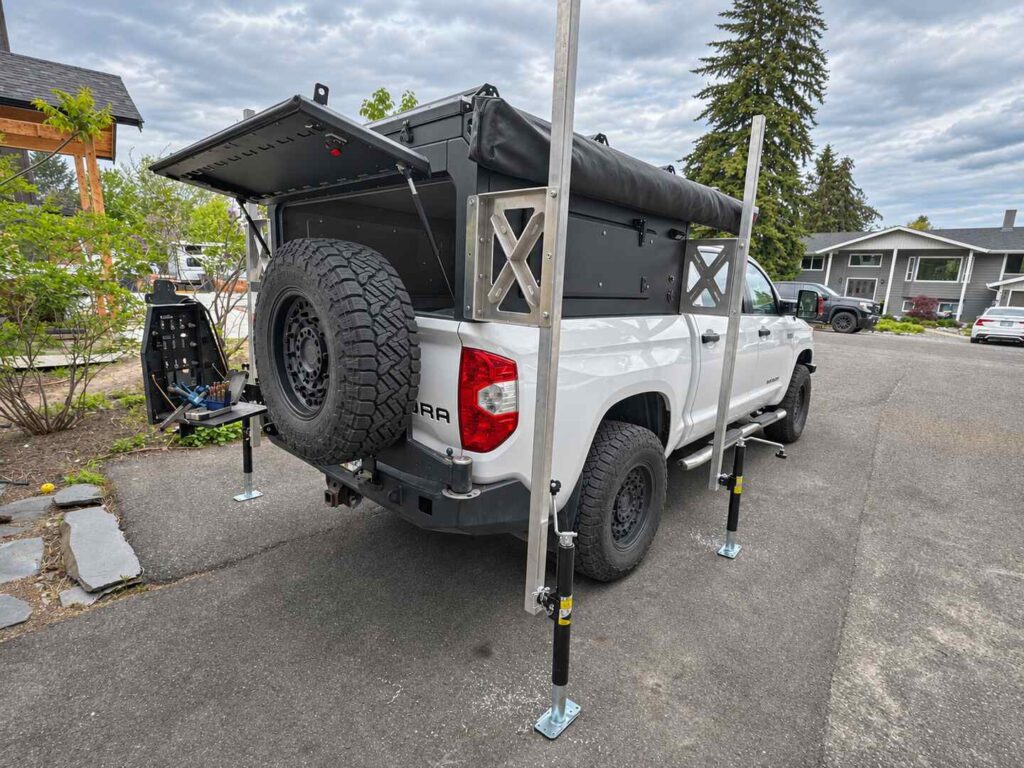
A truck camper should expand where your truck can take you, not turn every rough road, braking zone, or fuel stop into a compromise. This truck camper payload guide helps you account for the weight that actually lands on your pickup, so you can build a capable camp setup that still drives like a truck.
Payload is not just a number on a brochure. It is the margin between a truck that remains predictable under load and one that is overloaded before you leave the pavement. For overland travel, where water, recovery gear, tools, passengers, and uneven terrain all factor in, that margin matters.
Start With the Payload Sticker, Not the Internet
Every truck configuration is different. A truck’s advertised maximum payload may apply to a basic two-wheel-drive model with a particular cab, bed, engine, and wheel package. Your four-wheel-drive crew cab with upgraded trim, factory accessories, a sunroof, larger tires, and skid plates can have a very different real-world rating.
Open the driver’s door and find the Tire and Loading Information label. Look for the statement that says, “The combined weight of occupants and cargo should never exceed” a stated number. That is the payload number that matters for your specific truck as it left the factory.
Payload is the weight your truck can carry beyond its factory curb weight. That includes people, camper, water, food, tools, dogs, accessories, and everything else added to the vehicle. It also includes aftermarket equipment installed after delivery, such as a front bumper, winch, bed rack, drawer system, larger spare tire, or suspension components.
Do not assume a suspension upgrade increases legal payload. Better springs, airbags, shocks, or helper systems may improve ride height and control, but they do not change the manufacturer-rated GVWR, axle ratings, wheel ratings, or tire ratings. They are useful tools when selected correctly, but they are not a permission slip to overload the truck.
The Truck Camper Payload Guide Formula
The math is simple. The discipline is in using honest numbers.
Available payload = door-sticker payload – camper weight – passengers – water – gear – installed accessories
Start with the camper’s equipped weight, not its lightest published base weight. A camper listed at 350 pounds may be an excellent foundation, but options, bedding, awning mounts, batteries, power systems, fridge equipment, and roof cargo can move the final number. Ask for the weight of the configuration you are considering, then leave room for the equipment you will add after delivery.
Water is one of the most commonly missed items. One gallon weighs about 8.3 pounds. A 10-gallon water supply adds roughly 83 pounds before the container, pump, or mounting hardware. Fuel cans, propane, camp kitchen equipment, recovery boards, chains, fishing gear, mountain bikes, and a full cooler add up just as quickly.
A realistic planning list should include at least these four categories:
- The camper in its finished, usable configuration
- Everyone and every animal riding in the truck
- Fluids and consumables, including water, fuel, propane, and food
- Permanent and trip-specific gear, from a winch to sleeping bags
If your calculation leaves only a few pounds of payload, you do not have a flexible setup. You have a rig that works only when empty, and backcountry travel is rarely that tidy.
A Real-World Example
Say your truck’s door sticker shows 1,450 pounds of payload. You choose a 425-pound camper equipped for sleeping and storage. Add two adults at 340 pounds combined, 10 gallons of water at 83 pounds, 120 pounds of recovery and camp equipment, 90 pounds of food and clothing, and 130 pounds in accessories and a bike rack.
That totals 1,188 pounds. Your remaining payload is 262 pounds. That is workable, but it is not an invitation to add a heavy rooftop cargo box, another passenger, or a stack of firewood without checking the numbers again.
Now consider the same gear on a truck with 950 pounds of door-sticker payload. The setup is already over its rating. This is why a lightweight camper platform can be a smarter choice than trying to make a heavy traditional slide-in work on a half-ton or midsize truck. Less camper weight preserves capacity for the people and supplies that make the trip possible.
Payload Is Only One Part of Safe Loading
A payload figure is the first checkpoint, not the finish line. Truck campers place weight high and often toward the rear of the bed, so axle loading, tire capacity, handling, and center of gravity deserve equal attention.
Check Front and Rear Axle Ratings
Your certification label also lists front and rear Gross Axle Weight Ratings, or GAWR. A rear-mounted camper will usually load the rear axle more heavily, but it can also reduce front axle weight enough to affect steering feel and braking balance.
The only reliable way to know is to weigh the truck. Get a baseline weight with the truck loaded for travel, then compare the front axle, rear axle, and total weight against the numbers on your door labels. A public scale makes this straightforward. Weigh it with full fuel, the passengers who normally travel with you, water, and the gear you actually carry.
Watch tire ratings closely. Tires are a load-bearing component, not a styling choice. Their combined capacity on each axle must support the measured load, and pressures should follow the vehicle and tire manufacturer’s guidance for your application. Wheel ratings matter too, especially if you have changed from factory wheels.
Respect Center of Gravity and Cargo Placement
The farther weight sits behind the rear axle, the more leverage it applies to the truck. A compact, well-integrated canopy camper typically keeps the build lower and tighter to the truck than a tall, heavy camper extending far beyond the bed. That can improve the experience on washboard roads, forest service routes, crosswinds, and off-camber terrain.
Still, low weight does not eliminate the need to load intelligently. Keep dense gear low and forward whenever possible. Store recovery tools, water, and spare parts near the bed floor rather than high on the roof. Roof capacity is useful, but every pound above the cab raises the center of gravity.
Choose the Camper Around the Truck You Own
The best camper is not always the biggest one you can technically fit. A truck that serves as a daily driver, trailhead shuttle, work vehicle, and weekend escape rig benefits from restraint. A lighter build generally improves acceleration, braking, fuel use, suspension wear, and confidence when the road turns rough.
For midsize trucks, every pound has a job. A light pop-up sleeping system and integrated secure storage can preserve precious capacity for people and gear. Full-size trucks provide more room to work with, but trim level and cab configuration still matter. A luxury crew cab can lose hundreds of pounds of available payload compared with a more basic model.
This is where a purpose-built system earns its keep. Blindman Overland builds the Canadian-made Yucca-Pac around a lightweight aluminum, no-wood structure, with typical system weights in the roughly 300 to 450 pound range depending on configuration. That lower starting weight gives truck owners more freedom to carry the equipment that supports real trips instead of spending their entire payload budget on the shelter itself.
Do Not Forget Securement and Setup Weight
A camper must be attached according to the manufacturer’s installation requirements. Mounting hardware, bed rails, brackets, tie-downs, and reinforcement components all have weight and load limits. The truck bed itself also has structural limits, particularly around mounting points.
Before departure, inspect the setup. Confirm fasteners are torqued as specified, latches are fully engaged, gear is secured, and nothing can shift under braking or trail vibration. A loaded truck handles differently than an empty one, so give yourself more braking distance and take corners with purpose rather than speed.
A final scale visit after installation is one of the best investments you can make. It replaces assumptions with numbers and gives you a baseline for every future build change. Build light, pack with intention, and leave enough payload for the trip to stay free when conditions get wild.