
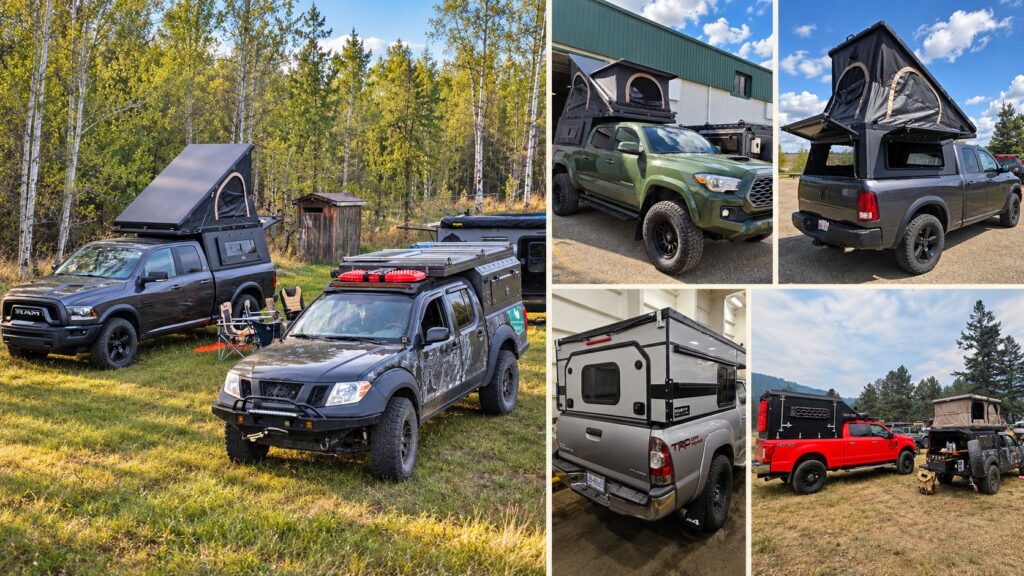
A pop-up camper can turn a pickup into a basecamp without turning it into an oversized RV. But pop up truck camper manufacturers build very different kinds of rigs under the same label. Some prioritize a large interior. Others chase the lowest possible entry price. A few build for rough roads, cold nights, secure gear transport, and the reality that your truck still has to work Monday morning.
The right choice is less about the tallest roof or the longest option sheet. It comes down to how you travel, what your truck can safely carry, and whether the camper keeps working when the road ends and the weather turns.
Pop Up Truck Camper Manufacturers Are Not All Building the Same Rig
The first mistake buyers make is comparing campers by floor plan alone. A spacious layout is nice at a campground. It matters less when your truck is off-camber on a forestry road, loaded with bikes, recovery gear, hunting equipment, or winter layers.
Traditional slide-in pop-ups typically place the living space inside the truck bed and extend over the cab. They can offer good sleeping room, indoor cooking, and available wet-bath layouts. The trade-off is weight. Once water, batteries, appliances, jacks, and gear are added, a seemingly manageable camper can push a half-ton truck past its practical payload. It can also change braking, handling, tire wear, and confidence on rough terrain.
Canopy-style pop-up campers take a different route. They use the truck bed as protected cargo space and create sleeping space above it when camp is set. For travelers who carry mountain bikes, tools, hunting gear, recovery equipment, or bulky outdoor equipment, that arrangement is often more useful than a compact RV-style interior. It also keeps the exterior footprint close to the truck.
There are also imported budget campers, boutique composite builders, and established RV brands with pop-up lines. None is automatically the wrong choice. The real question is whether the design matches your use case instead of your first impression at a showroom.
Start With Truck Payload, Not a Product Brochure
Payload is the number that decides what kind of camper makes sense. Find the payload sticker on your specific truck, then subtract passengers, fuel beyond standard capacity, accessories, cargo, hitch weight, and the camper’s real installed weight. Do not build a purchase decision around a dry weight that excludes the gear you actually travel with.
A lightweight camper in the roughly 300 to 450 pound range leaves far more room for people and equipment than a 1,500-pound slide-in. That difference can be the line between a capable midsize or half-ton build and a truck that needs suspension, tire, wheel, and brake upgrades before it is ready to leave pavement.
Weight distribution matters too. A heavy over-cab section puts load forward and high. A canopy system keeps the mass lower and closer to the bed rails, which can improve the way the truck feels on uneven terrain. It will not turn a pickup into a rock crawler, but it can preserve more of the truck’s natural handling than a large hard-sided camper.
Before comparing brands, answer three practical questions: What does your truck actually have available for payload? How much gear do you carry on a normal trip? And are you planning to travel highways, washboard roads, forest service roads, or technical trails? Those answers quickly narrow the field.
Materials Tell You What the Camper Is Meant to Survive
A pop-up camper sees constant movement. The roof lifts and lowers. The truck frame flexes. Wind pulls at fabric walls. Dust works into every seam. Rain, snow, sun, condensation, and vibration expose shortcuts that are easy to miss on day one.
Wood-framed construction is common because it is familiar and cost-effective. It can work well when maintained carefully, but water intrusion is a real long-term concern. Once moisture finds its way into a wall or roof structure, repairs can become expensive and difficult to diagnose.
Aluminum and composite construction are worth a closer look for year-round truck camping. A no-wood composite body eliminates one major source of rot risk, while a formed aluminum exoskeleton can add strength without adding unnecessary bulk. Look beyond marketing terms and ask where the structure carries load, how panels are joined, and whether the roof and wall system are designed for repeated off-road vibration.
Roof construction deserves the same scrutiny. If you plan to carry a rooftop tent, solar panels, awning, recovery boards, or a cargo box, verify the roof-lift and roof-load ratings separately. A roof that holds equipment while parked is not always rated to lift that equipment every day.
Security Is Part of the Shelter
For many truck campers, storage is an afterthought. Gear ends up in plastic bins, on the back seat, or under a tarp in the bed. That approach works until you need to leave the truck at a trailhead, a hotel, or a grocery store in an unfamiliar town.
A capable camper should give you secure, organized storage without forcing you to unload the truck to sleep. Integrated bed storage can protect expensive equipment from weather, wildlife, and opportunistic theft while keeping your camp setup simple. This matters especially for riders carrying bikes, anglers with rods and tackle, hunters with equipment, or anyone who travels with recovery gear and tools.
Pay attention to doors, latches, hinges, and the structure around them. Thin panels and basic locks may keep honest people honest, but they are not the same as a deliberately anti-intrusion design. Security will not be the flashiest feature on a build sheet, yet it can determine whether you feel comfortable leaving your rig for an all-day adventure.
All-Season Claims Need Specific Answers
Many campers are described as all-season. That phrase means very little without details.
Ask how the hard walls are insulated, whether the pop-up fabric has insulated options, and where thermal breaks are used. Ask how condensation is managed, how the roof seals, and what happens to the canvas in sustained rain or freezing temperatures. A diesel heater can make a cold night comfortable, but it cannot fix poor sealing or uncontrolled moisture.
The best setup depends on where you travel. A summer desert traveler may value ventilation and low weight over heavy insulation. Someone heading into the mountains in shoulder season needs a more serious shelter system. In Alberta and across the northern Rockies, conditions can shift from warm sun to sleet before dinner. Build for the weather you will actually face, not the forecast you hope for.
Compare Support as Carefully as the Camper
A camper is not finished when it leaves the factory. It has to be fitted to your truck, wired correctly, checked for water ingress, and supported when something eventually needs attention. That is where the difference between a seller and a real camper specialist becomes obvious.
Look for manufacturers or dealers that can explain mounting, payload, electrical integration, service intervals, replacement parts, and repair options in plain language. Pre-delivery inspection matters. Proper installation matters. So does having someone who can service the camper after a hard season of travel rather than treating it as a disposable accessory.
Blindman Overland builds the Canadian-made Yucca-Pac around this practical reality: low vehicle load, no-wood composite construction, formed aluminum protection, secure canopy storage, and a fast pop-up shelter for people who use their trucks beyond the campground. It is a different proposition from a heavy slide-in, and that is the point.
The Best Manufacturer Depends on How You Use Your Truck
Choose a traditional slide-in pop-up if you need more indoor amenities, spend extended time in established campgrounds, and have the truck payload to support it. Choose a lightweight canopy camper if you want to keep your truck nimble, carry protected gear, and move easily between daily driving, trailhead parking, and remote camps.
Price matters, but purchase price is not the whole number. Include needed truck upgrades, installation, electrical work, accessories, repairs, and the cost of lost capability if your rig becomes too heavy for the places you want to go. A lower-priced camper that needs major upgrades to work safely is not always the value play.
The strongest camper is the one that disappears into your routine. It carries your gear securely, sets up quickly when daylight is fading, handles bad weather without drama, and lets your truck remain a truck. Buy for the roads you intend to travel, then point the hood toward the next one. Live free. Be wild.