
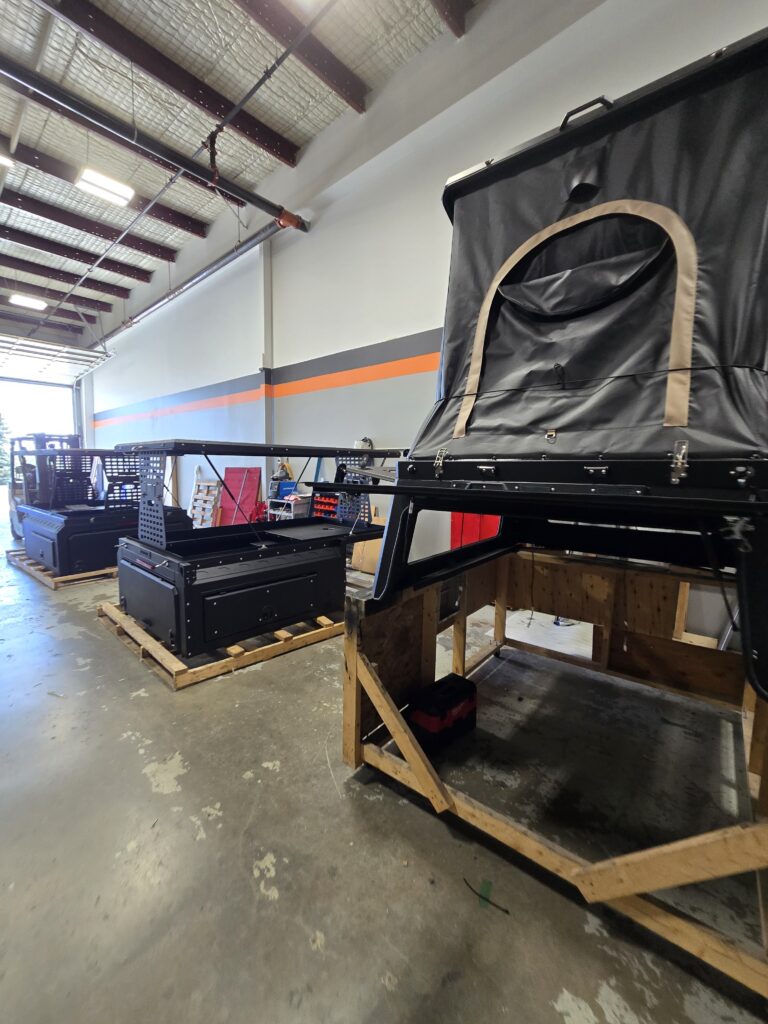
A low roofline on a pickup still solves a problem that a full-height RV never will: it lets you carry your shelter into the places that make the trip worth taking. So, do they still make pop up campers? Absolutely. They are being built for truck owners who want less weight, better trail clearance, secure gear storage, and a sleeping space that does not turn their daily driver into a bus.
Modern pop-up campers have moved well beyond the basic tent-on-wheels concept many people remember. The best current designs use aluminum, composite panels, insulated soft walls or hard-sided sections, compact lifting systems, and purpose-built mounting. They are lighter, more capable, and far more varied than the pop-ups of decades past.
Do They Still Make Pop Up Campers for Trucks?
Yes, but the category now includes several very different rigs. A traditional folding trailer is still available from established RV manufacturers. These campers tow behind a vehicle and expand at camp, usually with canvas bunk ends, a small kitchen, and more interior room than their folded profile suggests.
For truck owners, however, the more relevant options are truck-bed pop-up campers, canopy campers, and pop-up truck toppers. These mount directly to the truck or replace the standard canopy. The roof lifts when it is time to sleep, then drops back down for travel. That keeps wind resistance, overall height, and weight under control while retaining the mobility of a pickup.
The right choice depends on how you travel. Families who spend most weekends in established campgrounds may appreciate the floor space of a towable pop-up. A hunter, angler, mountain biker, or backcountry traveler may get more from a lightweight truck-based system that can carry equipment securely and follow rougher roads.
Why Pop-Up Campers Never Really Went Away
Pop-up campers have always delivered a useful trade-off: compact travel dimensions in exchange for a few minutes of setup at camp. That trade still makes sense, especially as truck owners push farther from serviced sites.
A fixed-height camper gives you instant access to a full interior, but it also adds wind drag, raises the center of gravity, and can make low branches, tight trails, parking garages, and fuel stops more complicated. A pop-up lowers that profile while traveling. On a midsize or full-size pickup, that difference can preserve the truck’s everyday usefulness.
Weight is just as important. Many conventional slide-in campers can consume most or all of a truck’s payload before passengers, water, recovery gear, bikes, and food are loaded. A lightweight pop-up can leave meaningful payload capacity available for the equipment that makes an off-grid trip possible. It can also reduce suspension strain and help the truck behave more predictably on uneven terrain.
There is no magic here. A lighter camper will not make every truck an off-road rig, and a pop-up roof still requires you to set up before bed. But for people who value mobility over a large indoor living room, the compromise is usually worth it.
The Modern Pop-Up Camper Is Not One Thing
The term “pop-up camper” gets used loosely, which can create confusion when comparing models and prices. Look at the basic architecture before comparing features.
Towable folding campers
These are the familiar trailer-based units. They offer plenty of sleeping room for their packed size and can be a good value for campground-focused trips. Their limitations show up when roads get rough, campsites get tight, or you want to use the truck separately once camp is set.
Slide-in truck campers
A slide-in pop-up sits in the pickup bed and typically provides the most traditional camper layout. Depending on the model, it may include a dinette, galley, water system, heat, and a raised bed. This is a strong option for longer stays, but buyers need to verify truck payload, bed length, tie-down requirements, and how much the loaded camper affects handling.
Canopy campers and truck toppers
A canopy-based pop-up turns the bed into protected cargo space below an elevated sleeping area. It is a natural fit for travelers carrying bins, recovery equipment, climbing gear, hunting equipment, or bikes. Instead of choosing between a secure truck cap and a place to sleep, you get both in one platform.
This design is especially appealing when weight matters. Blindman Overland’s Canadian-made Yucca-Pac, for example, uses a no-wood composite structure and formed aluminum exoskeleton to keep the system roughly in the 300 to 450 pound range, depending on configuration. That is a dramatically different load than a large hard-side camper, without giving up the enclosed storage that serious travel demands.
What Has Improved Since Older Pop-Ups?
Materials are the biggest change. Older campers often relied heavily on wood framing, basic tent fabric, and systems that were adequate for fair-weather weekends but less forgiving over time. Wood can absorb moisture, rot, and add weight. Modern builders increasingly use aluminum, composites, better seals, insulated panels, and purpose-built fabrics that stand up better to weather and vibration.
Security has improved too. A rooftop tent can be a fast path to sleeping above the ground, but it leaves much of your equipment exposed in the bed or forces you to carry it elsewhere. A canopy camper creates lockable cargo volume under the sleeping platform. For travelers leaving a trailhead vehicle unattended, that matters.
Roof-lift systems have also come a long way. The best designs are quick enough that setting up camp does not become a production. Still, ask how the roof is lifted, whether it can be operated by one person, what happens in high wind, and how the system is supported when open. Convenience is valuable, but reliable mechanical design is non-negotiable.
Are Modern Pop-Up Campers Good for Cold Weather?
They can be, but “four-season” is not a label to accept without questions. A pop-up roof naturally has more potential for heat loss than a fully hard-sided camper. Soft-wall sections, ventilation gaps, window design, and roof insulation all affect how the camper performs in wind, rain, and freezing temperatures.
For shoulder-season and winter use, look beyond a heater. Ask about insulation in the roof and walls, condensation management, weather seals, window coverings, and the materials around the lifting section. A heater can make the air feel warm while moisture quietly builds on cold surfaces. Good ventilation and thoughtful insulation work together.
Your own routine matters as well. If you are chasing powder days, hunting late into fall, or waking up at remote trailheads in the Rockies, choose a camper designed for those conditions. If most of your trips happen in dry summer weather, a lighter, simpler system may be the smarter buy.
How to Choose a Pop-Up Camper That Fits Your Truck
Start with the truck, not the camper brochure. Check the payload sticker on the driver-side door jamb, then account for the camper, passengers, fuel, water, accessories, tools, and gear. Do not rely on a dry camper weight alone. Real-world travel weight is what the truck carries.
Next, be honest about where you go. A camper for highway campgrounds has different priorities than one for washboard roads, forest service tracks, and remote access roads. Ground clearance, overall height, tie-down design, mounting method, and center of gravity all deserve attention.
Think about storage before sleeping capacity. Many buyers focus on the mattress and discover later that their wet boots, recovery boards, camp chairs, fly rods, food bins, and tools have nowhere secure to go. A well-organized truck-based pop-up should make it easier to carry the equipment you actually use, not force it onto the roof or into the cab.
Finally, look at support. A camper is exposed to vibration, weather, dust, and hard use. Choose a builder or dealer that can install the system correctly, inspect it before delivery, answer fitment questions, and handle service if something needs attention down the road.
The Best Reason to Choose a Pop-Up
Pop-up campers still exist because the old idea remains solid: travel light, set up fast, and keep the truck capable. The modern version simply does it with better materials, smarter storage, stronger security, and more realistic all-season potential.
If your goal is to cover ground, carry gear, and sleep comfortably without dragging a heavy RV into the backcountry, a pop-up is not a relic. It is one of the most practical ways to live free, be wild, and still drive home on Monday.